Joker
Joker
Joker
2023.9 - 2024.1
Role
Creative Technologist
Creative Technologist
Awards and honor
Introduction
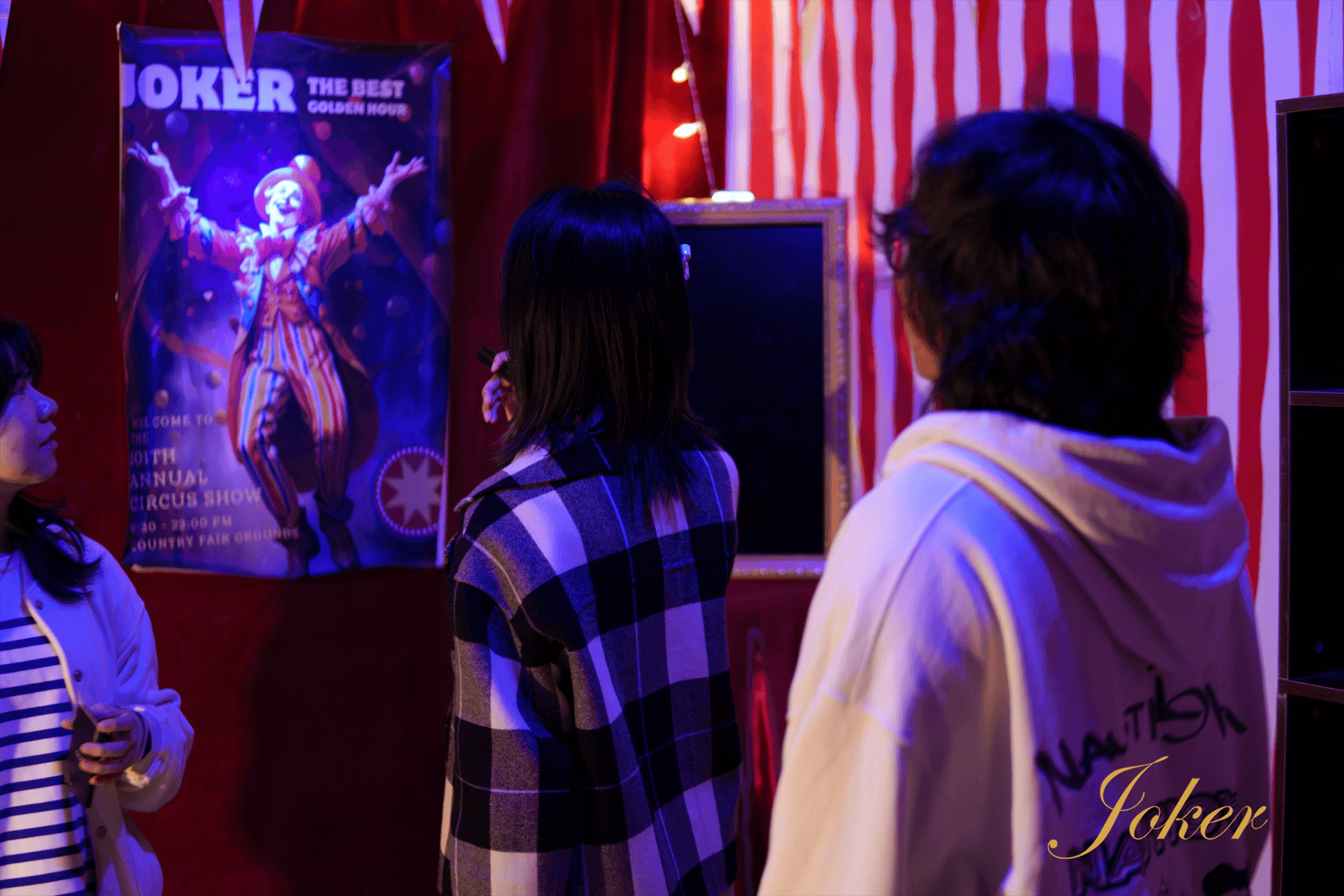
Project Overview: A 4m x 4m, 30-minute location-based entertainment (LBE) and immersive theater experience in which players investigate the mysterious death of a famous clown. Narrative & Experience: Participants take on the role of agents from the Bureau of Time and Space Management, tasked with collecting fragmented memories from different timelines related to the clown's life. Through a combination of mask placement puzzles, NPC interactions, projected performances, and motion-capture interactions at the clown’s vanity tables, players gradually uncover the truth behind the clown's demise. Each major revelation is visually represented by a flashback projected through a translucent screen. The story follows Henry, a clown who once dreamed of making it big in New York. He rose to fame as the lead clown in Cirque du Soleil. However, the outbreak of war led to a cultural collapse—audiences abandoned the circus, forcing Henry to perform in burlesque shows to keep the troupe alive. After the war, he had the chance to return to the stage, but years of hardship and verbal abuse from audiences left him broken. During one final performance, he took his own life on stage—ending both his story and the show. Technical Details: The installation employs environmental storytelling through three interconnected set pieces. Technologies used include motion capture, RFID, NFC, and cross-media projection. The use of projection screens helps "break the fourth wall," offering players a theatrical and emotionally immersive experience while blending physical and virtual elements.
Project Overview: A 4m x 4m, 30-minute location-based entertainment (LBE) and immersive theater experience in which players investigate the mysterious death of a famous clown. Narrative & Experience: Participants take on the role of agents from the Bureau of Time and Space Management, tasked with collecting fragmented memories from different timelines related to the clown's life. Through a combination of mask placement puzzles, NPC interactions, projected performances, and motion-capture interactions at the clown’s vanity tables, players gradually uncover the truth behind the clown's demise. Each major revelation is visually represented by a flashback projected through a translucent screen. The story follows Henry, a clown who once dreamed of making it big in New York. He rose to fame as the lead clown in Cirque du Soleil. However, the outbreak of war led to a cultural collapse—audiences abandoned the circus, forcing Henry to perform in burlesque shows to keep the troupe alive. After the war, he had the chance to return to the stage, but years of hardship and verbal abuse from audiences left him broken. During one final performance, he took his own life on stage—ending both his story and the show. Technical Details: The installation employs environmental storytelling through three interconnected set pieces. Technologies used include motion capture, RFID, NFC, and cross-media projection. The use of projection screens helps "break the fourth wall," offering players a theatrical and emotionally immersive experience while blending physical and virtual elements.
Contribution
Interactive System Development: Designed and implemented an interactive gameplay system driven by real-time motion capture, allowing players to trigger narrative flashbacks and affect the storyline through physical movement.
Audience Experience Design: Co-designed the complete audience journey, including onboarding, in-game progression, and emotional pacing, ensuring a cohesive blend of theater, game, and spatial interaction.
Stage Construction & Environmental Design: Actively contributed to the physical set construction, spatial layout, and immersive environment design, integrating storytelling elements with technical infrastructure to support seamless interaction across the space.
Interactive System Development: Designed and implemented an interactive gameplay system driven by real-time motion capture, allowing players to trigger narrative flashbacks and affect the storyline through physical movement.
Audience Experience Design: Co-designed the complete audience journey, including onboarding, in-game progression, and emotional pacing, ensuring a cohesive blend of theater, game, and spatial interaction.
Stage Construction & Environmental Design: Actively contributed to the physical set construction, spatial layout, and immersive environment design, integrating storytelling elements with technical infrastructure to support seamless interaction across the space.
Interactive System Development: Designed and implemented an interactive gameplay system driven by real-time motion capture, allowing players to trigger narrative flashbacks and affect the storyline through physical movement.
Audience Experience Design: Co-designed the complete audience journey, including onboarding, in-game progression, and emotional pacing, ensuring a cohesive blend of theater, game, and spatial interaction.
Stage Construction & Environmental Design: Actively contributed to the physical set construction, spatial layout, and immersive environment design, integrating storytelling elements with technical infrastructure to support seamless interaction across the space.